7 interesting facts about Seville Cathedral you should know before your visit
Legend has it that whilst planning the construction of Seville Cathedral, the canons said: “Let’s build a church so grand that those who see it so intricately carved will take us for madmen.” And they were right: no one who sees it can remain indifferent to its beauty. Today, it is one of the most impressive and distinctive monuments in Seville’s heritage. If you haven’t visited it yet, we recommend taking a guided tour of Seville Cathedral so you don’t miss a single detail. Today we’re sharing some interesting facts about Seville Cathedral that you’re sure to have missed and which will help you prepare better for your guided tour:
1. Seville Cathedral is the largest Gothic cathedral in the world
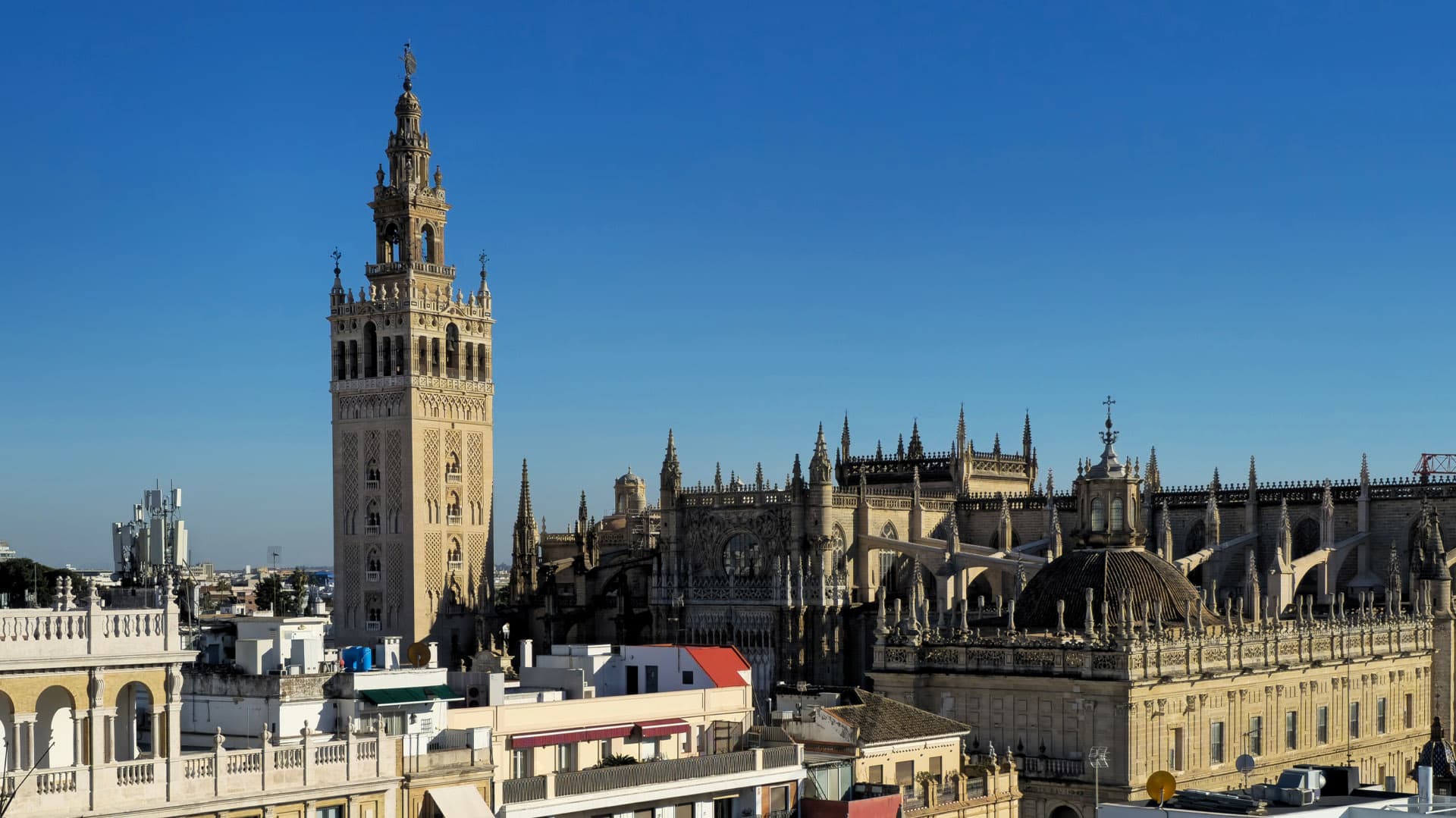
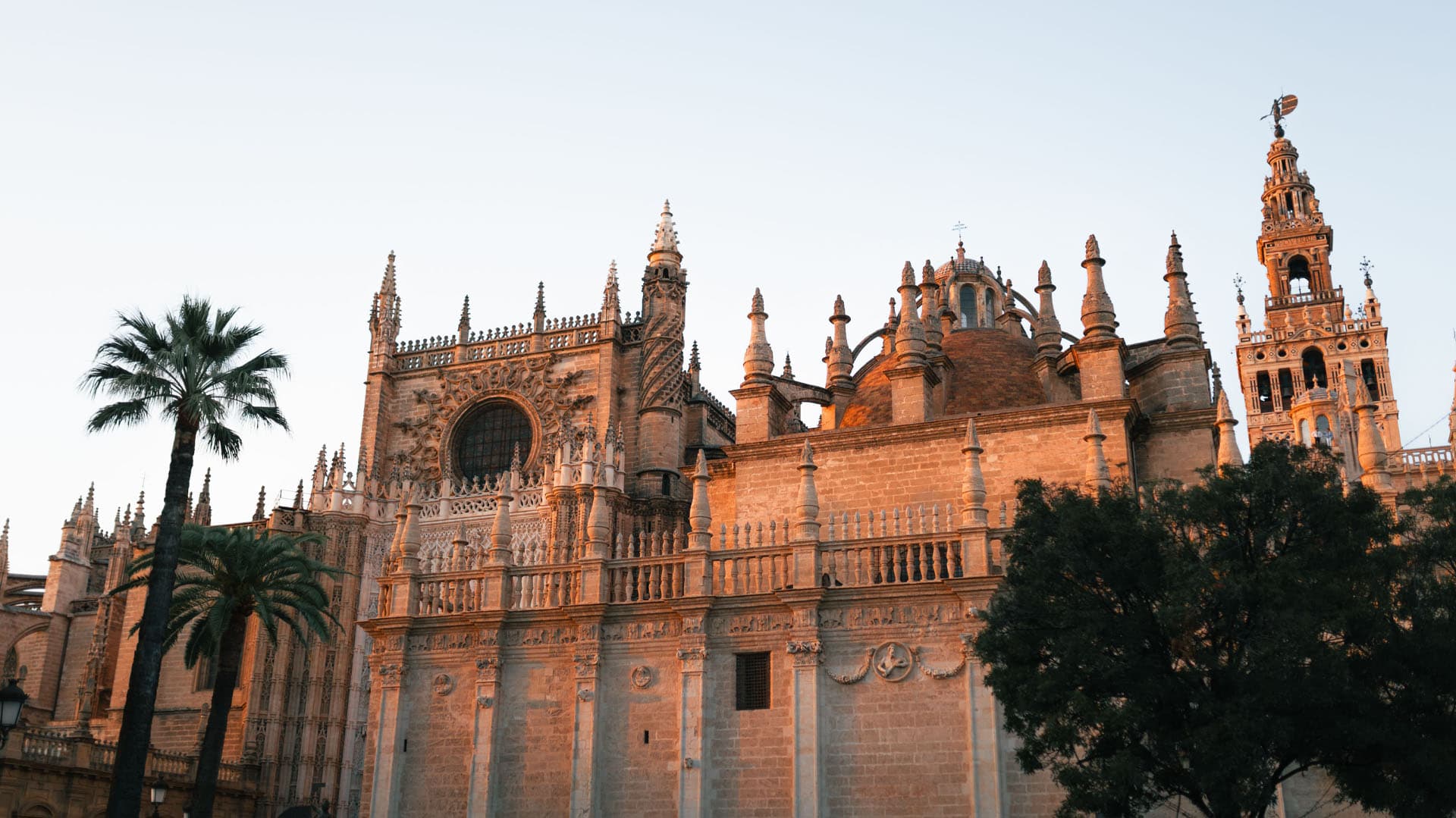
With a floor area of 11,520 square metres, Seville Cathedral is the largest Gothic cathedral in the world, and the third-largest Catholic church overall, behind St Peter’s Basilica in the Vatican and St Paul’s Cathedral in London. Furthermore, the cathedral’s nave is the longest in Spain, standing 42 metres high and covering an area of almost 9,000 square metres.
2. Seville Cathedral was built on the site of the former Mosque
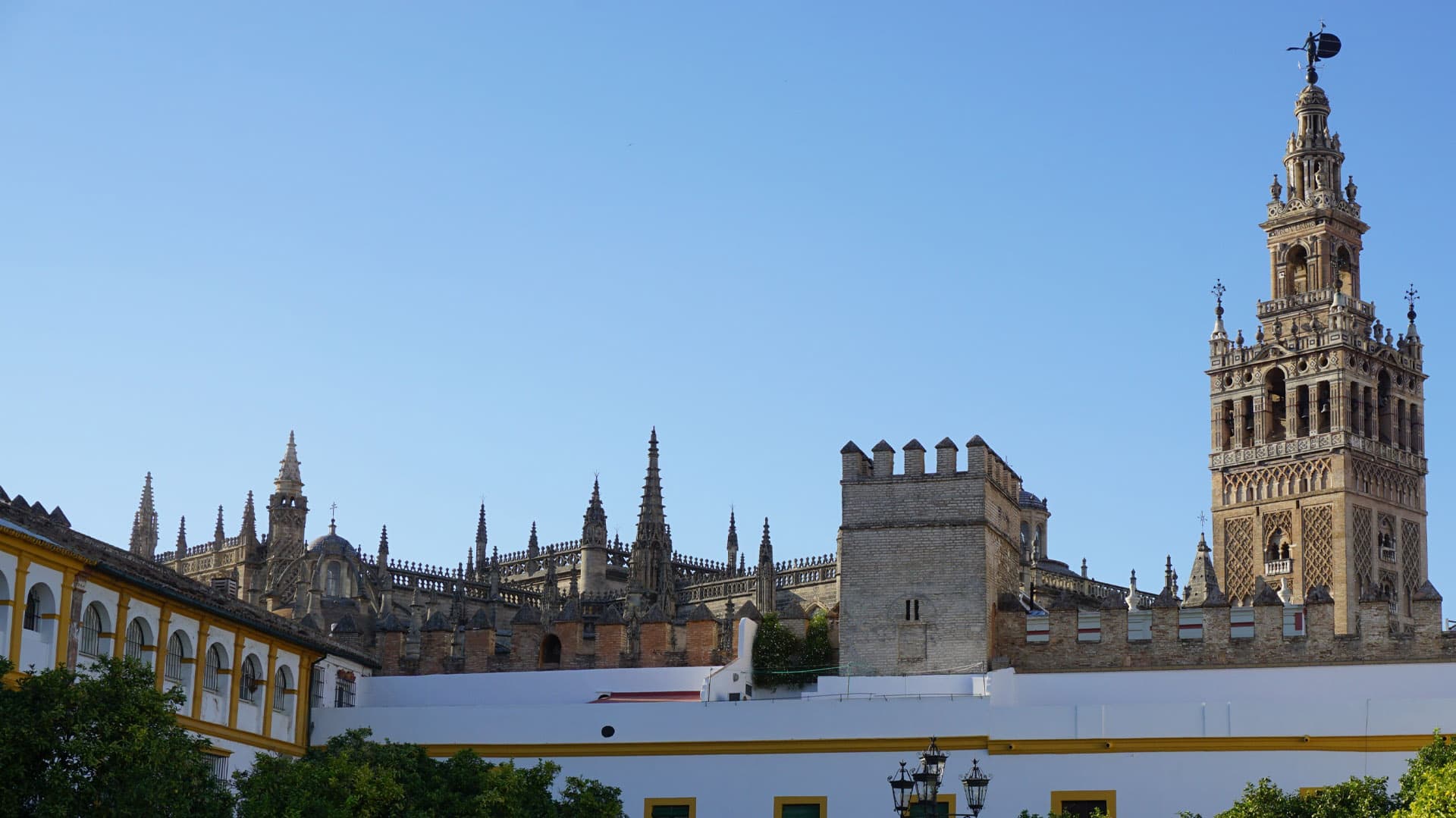
Although there is no documentation confirming its date of construction, it is believed that work on Seville Cathedral began in 1401. It was built on the site of the former Great Mosque of Isbilya, which had been severely damaged by the earthquake of 1356. Three elements of this former mosque have been preserved: the Patio de los Naranjos, the Puerta del Perdón – one of the entrances to Seville Cathedral – and the lower two-thirds of the Giralda, the mosque’s former minaret.
3. Where do the chains surrounding Seville Cathedral come from?
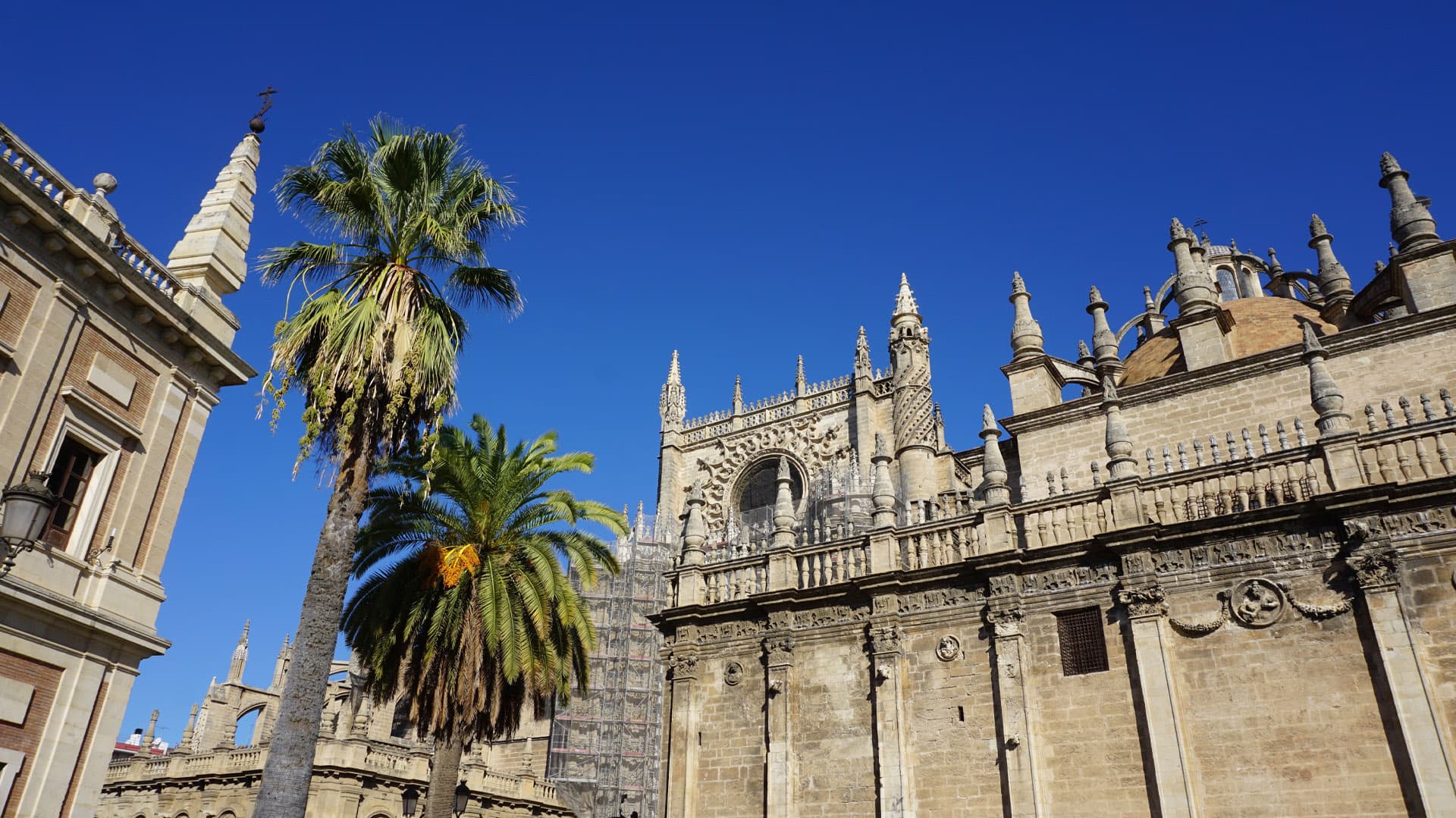
If you’ve explored Seville Cathedral and its forecourt, one very distinctive feature will surely have caught your eye: the columns entwined with iron chains. Their purpose was to mark the boundaries of ecclesiastical jurisdiction, which operates under a different system of justice to the ordinary courts. In this way, anyone wishing to ‘escape’ from ordinary justice and seek ‘asylum’ within ecclesiastical territory knew exactly where to go. This distinction between jurisdictions remained in place in Seville until the mid-16th century.
4. There’s a crocodile in Seville Cathedral
Did you know there’s a life-size crocodile in the Cathedral? The famous ‘Seville lizard’ is believed to have been a gift from the Sultan of Egypt to King Alfonso X around the year 1260. Although a stuffed specimen was originally displayed, it was later replaced by a wooden one. It is situated in one of the corridors surrounding the Patio de los Naranjos, alongside a piece of animal flesh, an elephant’s tusk and a sceptre. Don’t forget to take a look at them during your tour of Seville Cathedral!
5. Seville Cathedral ‘breathes’
Yes, you’ve read that right. Every day, the building’s structure expands and contracts by up to three centimetres as a result of temperature changes. This ‘breathing’ is perfectly normal in structures such as Seville Cathedral and prevents disasters such as collapses and cave-ins, which are more likely to occur in rigid architectural structures.
6. Who is buried in Seville Cathedral?
Inside Seville Cathedral lie the remains of several former monarchs, such as Ferdinand III the Saint, Alfonso X the Wise and Peter I the Cruel. Likewise, other iconic figures from Spanish history are buried there, notably the mausoleum of Christopher Columbus and the tomb of his son, Hernando. All these tombs are on public display and are visited during the guided tour of Seville Cathedral.
7. Seville Cathedral is a World Heritage Site
Seville Cathedral was designated a UNESCO World Heritage Site in 1987, alongside the Archivo de Indias and the Real Alcázar. The original text of the declaration reads:
“Seville Cathedral – and the Alcázar – bear exceptional witness to the Almohad civilisation and to Christian Andalusia, dating from the Reconquista of 1248 to the 16th century. The Giralda, which influenced the construction of numerous towers in Spain and the Americas, is a masterpiece of Almohad architecture. The immense cathedral, with its five naves, is the largest Gothic building in Europe. The elliptical space of the Cabildo, designed by Hernán Ruiz, is one of the most beautiful architectural works of the Renaissance.”
Seville Cathedral is, without a doubt, a must-see for any traveller visiting the Andalusian capital. Explore it with any of the various guided tour options that include a ticket to Seville Cathedral.